


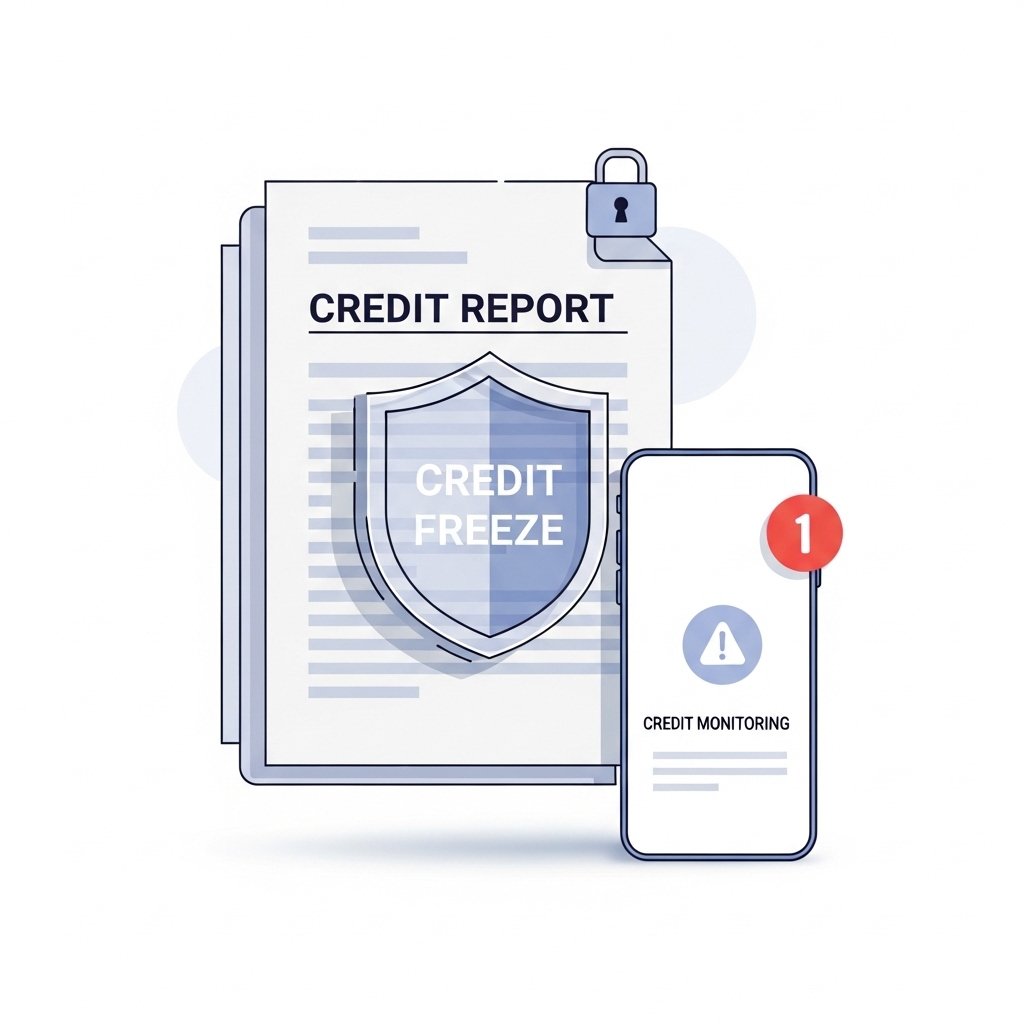
When your personal information is exposed in a data breach or identity theft incident, one of the most powerful defensive actions you can take is freezing your credit.
A credit freeze does not fix fraud that already happened. It prevents new accounts from being opened in your name.
Combined with active credit monitoring, it becomes a strong shield against financial identity abuse.
Understanding how both work can help you act quickly and confidently.
What Is a Credit Freeze?
A credit freeze, also called a security freeze, restricts access to your credit report.
When your credit is frozen:
Lenders cannot access your credit file.
New credit cards cannot be opened.
Loan applications are blocked.
Fraudulent financing attempts are stopped.
Without access to your credit report, most lenders will deny new applications.
It does not affect your existing accounts.
When You Should Consider a Credit Freeze
After a data breach involving sensitive information
If your Social Security number was exposed
If you detect suspicious activity
If you are a victim of identity theft
If you want preventive protection
A freeze is especially important if financial identifiers were compromised.
How to Place a Credit Freeze
You must contact each major credit bureau individually.
In the United States, that includes:
Equifax
Experian
TransUnion
Each bureau allows you to:
Request a freeze online
Request by phone
Request by mail
The freeze is free in many jurisdictions.
You will receive a PIN or login credentials to manage it later.
How to Temporarily Lift a Freeze
If you apply for credit, you can temporarily lift the freeze.
You can:
Lift it for a specific lender
Lift it for a specific period
Remove it completely
After approval, you can refreeze your credit.
What Credit Monitoring Does
Credit monitoring tracks changes to your credit report.
It alerts you when:
A new account is opened
A hard inquiry occurs
Personal information changes
Balances shift significantly
Monitoring does not prevent fraud. It alerts you quickly so you can respond.
Free vs Paid Monitoring
Some credit bureaus offer free monitoring services. There are also third party services.
Paid services may include:
Dark web monitoring
Identity restoration support
Insurance coverage
Expanded alert systems
Choose based on your risk level and comfort.
Additional Protective Steps
Place a fraud alert if suspicious activity is detected.
Review your credit reports regularly.
Enable transaction alerts on bank accounts.
Use strong passwords and multi factor authentication.
Security works best in layers.
Common Misconceptions
A credit freeze does not:
Lower your credit score
Close existing accounts
Stop pre approved credit offers automatically
Prevent fraud on current accounts
It only blocks new credit applications.
If You Are Already a Victim
If identity theft has occurred:
File a report with consumer protection authorities.
Contact affected lenders immediately.
Dispute fraudulent accounts.
Keep documentation of all communication.
Act quickly to limit long term impact.
Final Thoughts
Credit freezes and monitoring tools are defensive strategies.
They do not eliminate risk, but they significantly reduce exposure.
If your sensitive data is compromised, do not wait.
Freeze your credit.
Monitor activity.
Stay proactive.
Identity theft is easier to prevent than to repair.