

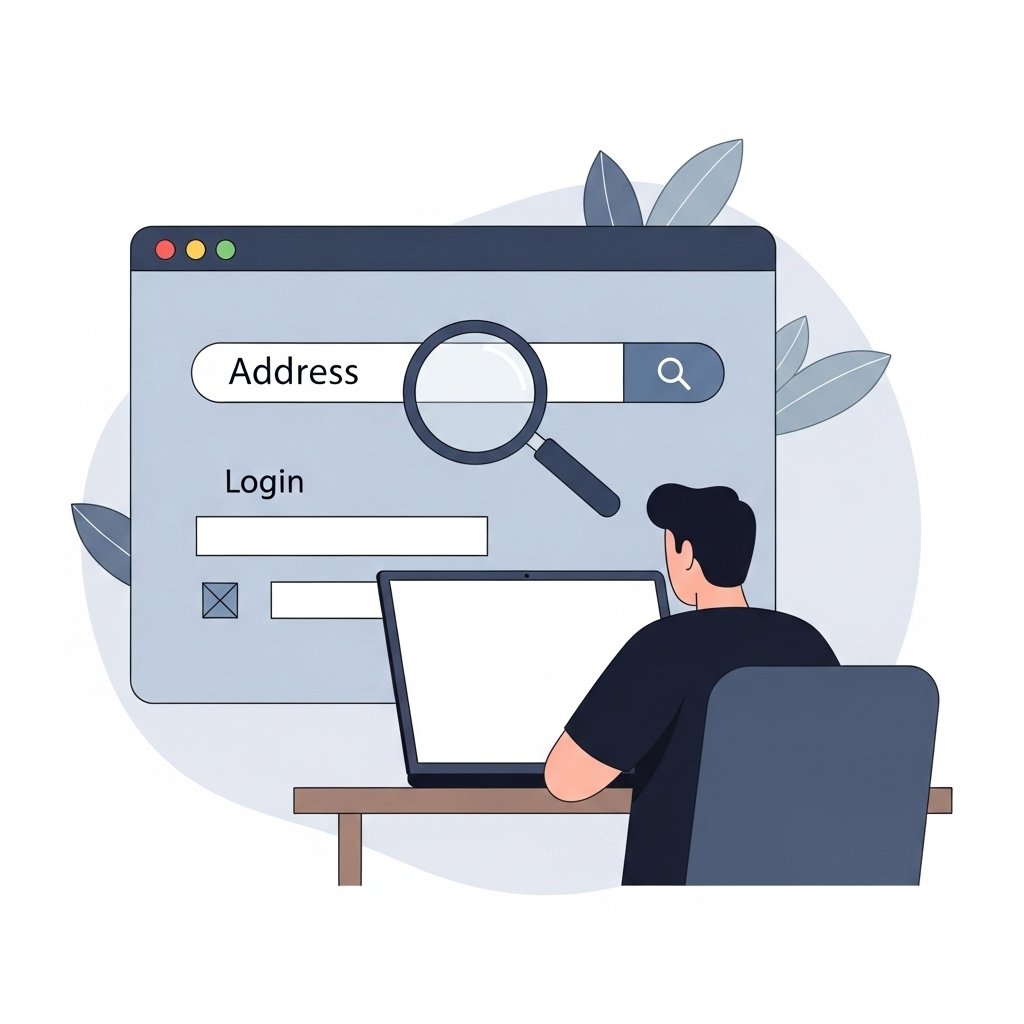
Before you enter a password, pause and look at the URL.
This simple habit can prevent many account takeovers. Phishing websites are designed to look identical to real login pages, but the difference is always in the address.
If the URL is wrong, the site is not safe.
Why the URL Matters
Attackers can copy the entire design of a legitimate website.
They can replicate:
- Logos and branding
- Layout and colors
- Login forms and buttons
Visually, the page may look perfect.
The only reliable difference is the domain in the address bar.
Always Check the Domain Name
Focus on the main domain, not just the full string.
For example:
- correct: example.com
- suspicious: example-login.com
- suspicious: example.verify-account.net
Small changes can indicate a fake site.
Read the domain carefully before entering credentials.
Watch for Misspellings
Phishing domains often use subtle variations.
Examples include:
- Replacing letters with similar characters
- Adding extra letters
- Removing letters
- Using numbers in place of letters
These changes are easy to miss if you are in a hurry.
Be Careful With Subdomains
Attackers may place a trusted name at the beginning of a longer address.
For example:
secure.example.com.fake-site.net
The real domain is the last part, not the first.
Always check the final domain after the last dot.
Look for Secure Connection Indicators
Most legitimate websites use secure connections.
While a secure connection alone does not guarantee safety, it is still a basic requirement.
If the browser shows warnings about an insecure connection, do not proceed.
Avoid Clicking Links From Messages
Many phishing attacks begin with a link in:
- Emails
- Text messages
- Direct messages
Instead of clicking the link, access the site manually.
Type the address yourself or use a saved bookmark.
Use Bookmarks for Important Sites
For accounts you use regularly:
- Save the official login page as a bookmark
- Use that bookmark instead of searching or clicking links
This reduces the risk of landing on a fake site.
What To Do If You Entered a Password on a Suspicious Site
If you suspect you entered your password on a fake page:
- Change your password immediately
- Enable multi factor authentication
- Log out of all active sessions
- Check for unusual account activity
If the same password was used on other accounts, update those as well.
Final Thoughts
Phishing sites rely on visual deception.
The page may look correct, but the address reveals the truth.
Check the URL every time before entering your password.
Read the domain carefully.
Avoid rushed decisions.
Use trusted access methods.
A quick glance at the address bar can prevent serious security issues.