


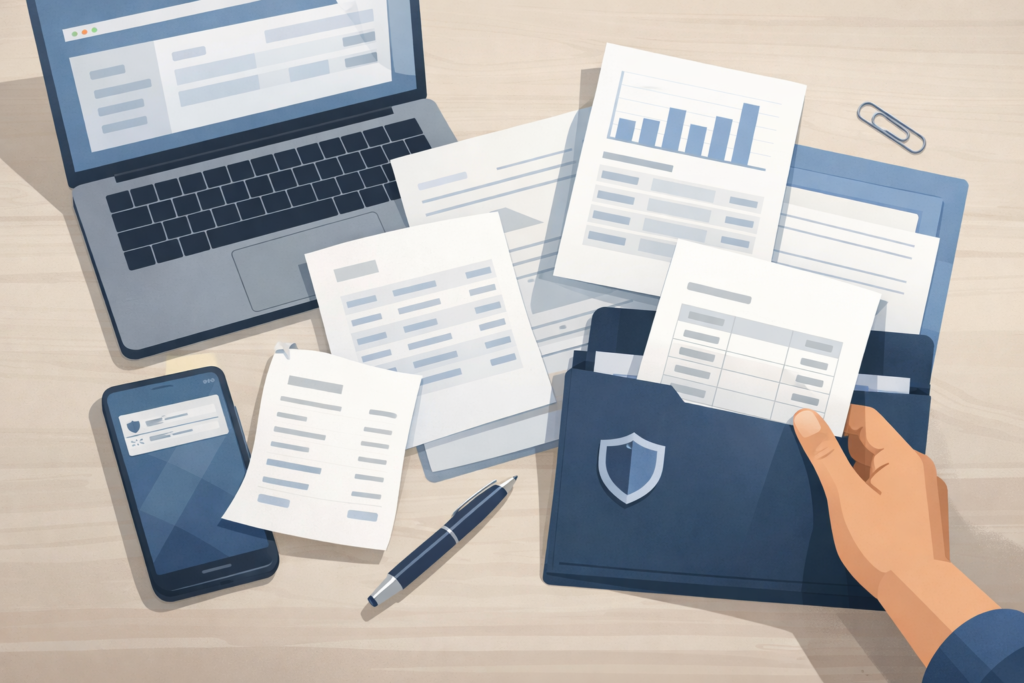
If you become a victim of fraud, your bank will ask for one thing immediately: evidence.
The speed and quality of your documentation can directly impact whether a charge is reversed, a transfer is investigated, or your claim is approved.
Many disputes fail not because fraud did not happen, but because evidence was incomplete.
Here is how to preserve evidence properly before reporting to your bank.
Act Before Information Disappears
Scammers often:
Delete conversations
Deactivate accounts
Remove fake websites
Change usernames
Block victims
Before confronting the scammer or reporting the case, secure your documentation.
Once content disappears, recovering it becomes difficult.
Screenshot the Full Conversation
Capture the entire interaction, not just the payment request.
Include:
Usernames
Profile photos
Message history
Time stamps
Payment instructions
Threats or urgent language
Scroll up and capture everything in order.
Avoid cropping too tightly.
Save Transaction Records
Your bank will need proof of the financial transaction.
Document:
Transaction confirmation
Reference number
Date and time
Amount
Recipient name or account number
If it was a wire transfer, include SWIFT or routing details.
If it was a card transaction, capture the merchant descriptor exactly as it appears.
Capture Payment Receipts
If you paid through:
Online banking
Payment apps
Crypto exchanges
Save:
Confirmation emails
In app transaction logs
Screenshots of payment history
Keep original files if possible.
Preserve Website Evidence
If a website was involved:
Screenshot the homepage
Capture the checkout page
Save the product listing
Record the URL in the address bar
If possible, save the webpage as a PDF.
Fake stores often disappear quickly.
Document Call Logs
If fraud involved phone calls:
Screenshot call history
Note call duration
Save voicemails
Write down what was said
Include the number exactly as displayed.
Caller ID spoofing is common.
Record Timeline Details
Write a brief summary including:
How the contact started
When payment was requested
When payment was sent
When you realized it was fraud
Any follow up communication
Clear timelines strengthen credibility.
Do Not Edit Screenshots
Keep evidence in original form.
Avoid:
Cropping out time stamps
Altering file names
Editing images
Adding annotations over originals
If you want to highlight something, make a copy and annotate separately.
Banks may request unedited files.
Organize Evidence Clearly
Create a folder containing:
Conversation screenshots
Transaction records
Payment confirmations
Website captures
Your written timeline
When you contact the bank, you can provide structured documentation immediately.
Contact the Bank Quickly
Time matters in disputes.
The sooner you report:
The higher the chance of reversing the transaction
The easier it is to trace funds
The stronger your position
Provide facts clearly and calmly.
What Banks Typically Look For
Proof that you did not authorize the transaction
Evidence of deception
Transaction details
Contact attempts with the merchant
Timeline consistency
Clear documentation speeds up investigation.
Final Thoughts
Fraud investigations rely on evidence, not emotion.
The more organized and complete your documentation, the stronger your case.
Preserve everything.
Act quickly.
Report clearly.
Strong evidence improves the likelihood of recovery.