


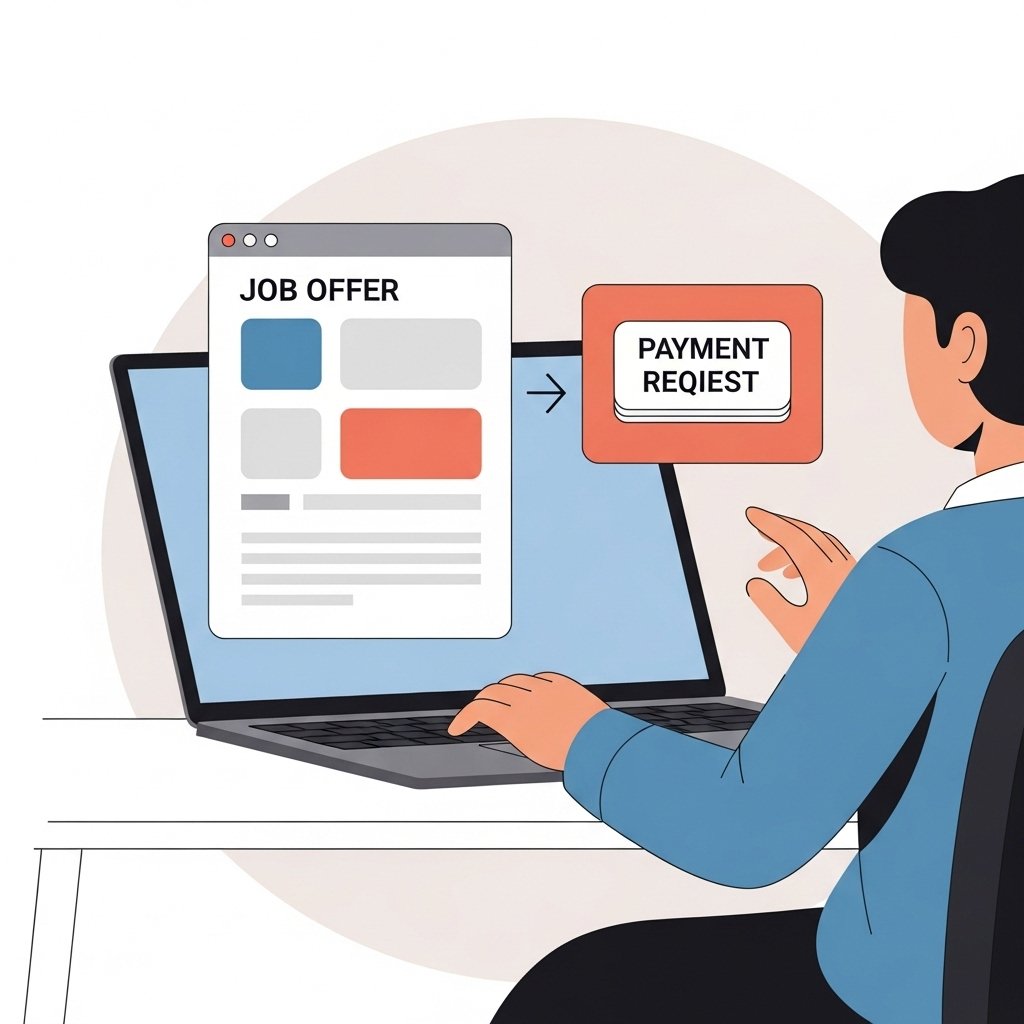
If a job offer requires you to pay money before you start working, it is almost always a scam.
Employment scams have become increasingly common online. Fraudsters pose as recruiters, hiring managers, or remote work coordinators and offer attractive positions with flexible hours and high pay. Once the victim shows interest, the scammer introduces a fee.
The payment may be described as a processing cost, training fee, equipment deposit, or background check charge.
Legitimate employers do not charge applicants to get hired.
How Job Fee Scams Usually Begin
Most job scams start through online platforms or direct messages.
Common sources include:
- Job boards
- Social media messages
- Messaging apps
- Email offers for remote work
- Fake recruiter profiles
The offer often sounds appealing and easy to start.
Examples include remote assistant jobs, data entry work, or online customer service roles.
Typical Fees Used in Job Scams
Scammers may request payments for different reasons.
Common examples include:
- Application processing fees
- Training materials
- Certification or licensing costs
- Equipment deposits
- Software access
- Background checks
These fees are often presented as a normal step before starting the job.
In reality, the job does not exist.
Warning Signs of a Job Fee Scam
Look for these red flags.
- The job offer arrives unexpectedly
- The recruiter pushes you to act quickly
- Payment is requested before a contract is signed
- The interview process is extremely short or informal
- The recruiter communicates only through messaging apps
- The company website is unclear or recently created
Legitimate companies follow structured hiring processes.
Payment Methods Often Requested
Scammers prefer payment methods that are difficult to reverse.
These may include:
- Gift cards
- Cryptocurrency
- Wire transfers
- Peer to peer payment apps
If a recruiter asks you to pay using these methods, stop immediately.
What Legitimate Employers Actually Do
Real companies invest in employees.
They do not require applicants to pay fees to be hired.
In legitimate hiring processes:
- Background checks are paid by the employer
- Training materials are provided by the company
- Work equipment is supplied or reimbursed
- Payroll information is handled after hiring
Applicants are not charged to access employment.
What To Do If You Are Asked to Pay
If a recruiter asks you for money:
Stop the conversation.
Do not send payment.
Research the company independently.
Report the account or listing where the job was posted.
Scammers rely on urgency and excitement about the job offer.
Slowing down and verifying details often exposes the fraud.
If You Already Sent Money
If you already paid a fee:
Contact your bank or payment provider immediately.
Report the incident to the platform where the job was advertised.
Save screenshots of messages and payment confirmations.
Quick reporting improves the chances of investigating the transaction.
Final Thoughts
A legitimate job offer should never require payment from the applicant.
If money is requested before employment begins, treat it as a warning sign.
Verify job offers carefully.
Research the company independently.
Never pay fees to start a job.
Understanding this simple rule can prevent a common and costly scam.